Against Selflessness
Why modern 'selflessness' is apocryphal at best

Selflessness is not the virtue you think it is. By ‘selflessness,’ I don’t mean generosity or compassion in a personal, intimate sense. I mean the culturally sanctified abandonment of one’s own values, vision, or identity in pursuit of societal approval - the masquerade of virtue, not virtue itself. While this may sound intense, I ask only that you consider the argument on its merits, and give the devil (for the time being, me) his due.

This isn’t a novel idea. Ayn Rand explored it thoroughly in (her masterpiece) The Fountainhead. Nor is it meant as a nihilistic or Machiavellian proposition. Rather, I hope it empowers you to examine what truly matters within your own social landscape.
Society waxes lyrical about the importance of selflessness, using it as a moral cudgel in its ongoing cycle of virtue-signaling and self-aggrandizement. In the world we inhabit, grand gestures of apparent self-sacrifice are often valued more than the quiet, focused pursuit of something meaningful. It’s easy to be swept along by this tide of herd moralism. But it's a corrupt and corrosive current, one that separates you from your individuality and from your most authentic aspirations.
The true pursuit is individual. It is intrinsic, internal, and inherently of the self. Yet today, the dominant mode of human expression is without the self, and I take this to be synonymous with selflessness. A totalizing ethic-aesthetic has emerged: one that erases the self from the equation in order to brand vacuous signaling as moral righteousness.
Now, you might say:
“Joe, surely we aren’t pretending that corrosive selfishness doesn’t exist.”
Of course it does. But the type of selflessness I’m describing is far more subversive, and therefore more pervasive... and more pernicious. Ayn Rand writes of people who want to be admired as builders but cannot build, as artists but are not artistic, as intellectuals but do not read. This is where selflessness leads: to a culture that pedestalizes shallow socialization over genuine identity and achievement.
As the antidote, I propose selfishness - not in its base or greedy form, but as a radical commitment to self-exploration and self-creation. Popularity is ephemeral. What matters is the integrity of one’s inner voice... the courage to acknowledge and pursue one’s self. Understand that your pursuits are your own. Achieve without the need for anyone to witness it. Succeed without the necessity of applause. That is where we find meaning, not in performative moralism.
Consider this ethos in practice:
Imagine a painter living in obscurity, producing a vast body of work. His art was not made for the public - which found it strange and eccentric - nor was it crafted for fame or fortune. His pursuit was deeply personal: an attempt to express his own vision, his own truth. Each painting was a private triumph, a conversation with the self.
He died having sold only one piece. It was only after his death that the world recognized his genius. The very qualities once dismissed as eccentric were later seen as revolutionary expressions of one man’s soul. That painter was Vincent van Gogh. The poignance of his story is not in the eventual popular recognition, but in the raw, lifelong devotion to the self that powered his work. His posthumous fame was not the point... it was a consequence. What mattered was that he created from within.
Even Socrates, the father of Western reason, spoke of an inner voice (his so-called daimonion) which he obeyed above all else. It warned him when he was about to act against his true nature, often in defiance of public convention. During his trial for corrupting the youth of Athens, this voice remained silent. Socrates took its silence as approval: a sign to stand by his principles rather than flee or plead for his life. He chose death over betraying that inner guide, believing that to act against it would be a deeper kind of corruption. Please read that again because it actually happened! In this, Socrates affirmed that the authority of the self is greater than the authority of the crowd.
I hear you, I hear you:
"Joe, death can hardly be touted as an exemplary outcome of pursuing one's self."
Fair, if your highest value is survival. But Socrates didn’t see life itself as the ultimate good. He saw living rightly (in alignment with one’s self) as a more meaningful pursuit. His death wasn’t the goal; it was the price of not abandoning himself, and that is a call to integrity.
Let's be honest though: you're probably not on trial in Athens.
The modern consequences of pursuing your self are rarely fatal. But they can feel like death. You might lose approval. You might be misunderstood. You might leave a job that looks good on paper but devours your soul. You might disappoint people who’ve come to expect a version of you that you’ve outgrown. These losses can be real. But they are certainly not ruin, but opportunity.
What we fear as endings are sometimes just offramps from lives we were never meant to lead. And on the other side of that fear is something only the self can access: meaning, direction, truth, fulfillment. Not the fleeting kind that comes from applause, but the deep kind that comes from living in accordance with your nature. Listening to your daimonion. Pursuing your self.
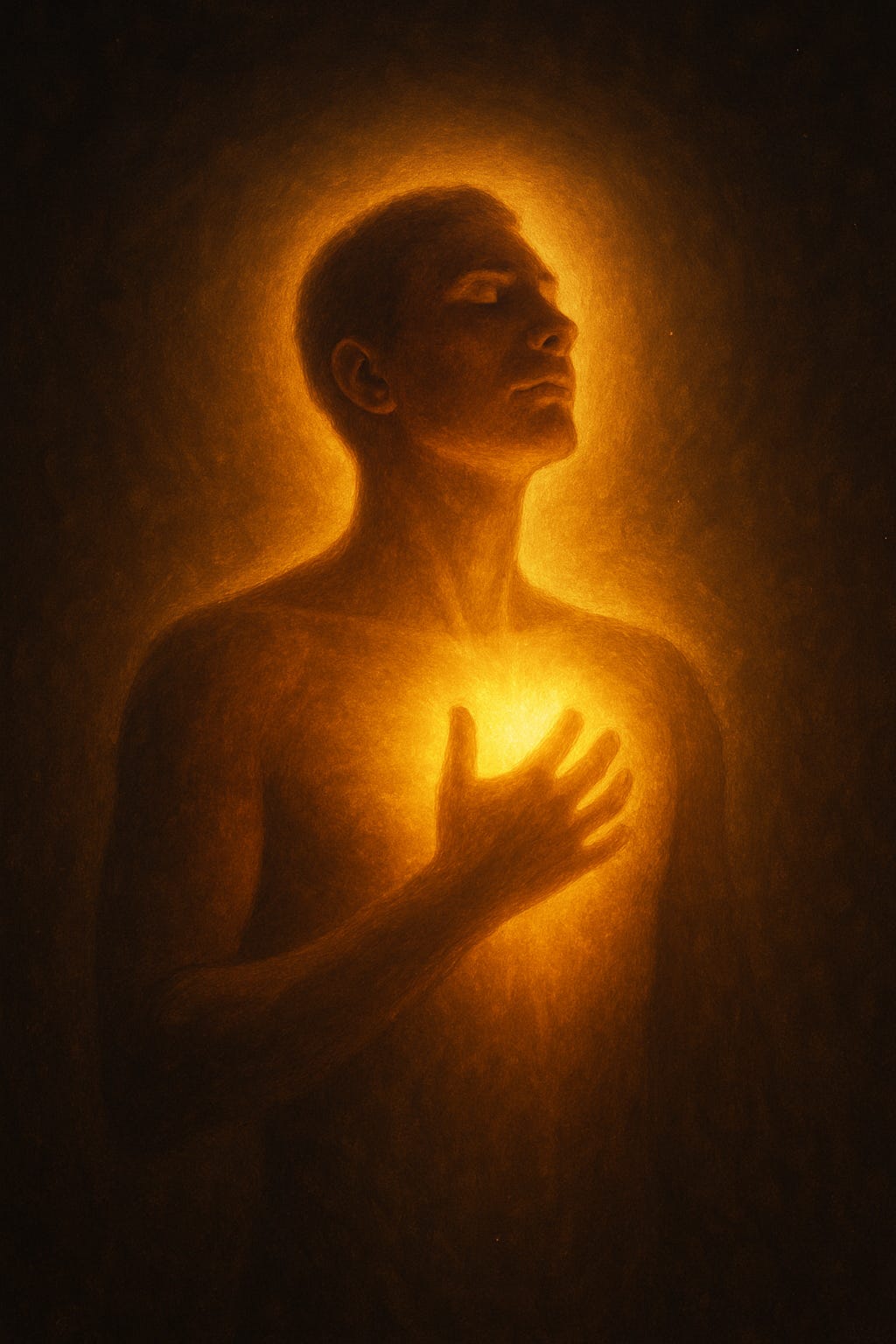
So no, the lesson here isn’t “die for your truth.” It’s “live in such a way that you don’t have to accept an internal death that is just as painful, just to be accepted.”
Celebrating the individual is how we foster prosperity. I’m not advocating for egoism in its cheap, hedonistic form, but for a principled focus on the self as the wellspring of meaning and creation. Yes, selfishness can turn toxic: solipsism, narcissism, and greed are real and corrupting. But, these are perversions, not proofs against the principle.
True selfishness is the refusal to outsource meaning. It is the abandonment of populism in favor of principle. It is the commitment to identity - to the self - in a world that rewards the performance of virtue over the practice of it.
When I read The Fountainhead, I was astonished. I kept its ideas in my mind for months. There and back. And I made them my own, as much as I could. I find your writing very gratifying; it took me back to those years of wonder at Ayn Rand's ideas.
This is a refreshing take. I remember in high school being inherently suspicious of people who boasted about charity - there'd always be people raising money or going on "charity" trips overseas - of course, the sentiment was great, but deep down it seemed like a selfish way to make themselves feel good and morally superior. What's much harder is doing the work on yourself first to be the best individual you can, so that you can contribute to society in the best way possible. Of course there's a time and a place for charity and selflessness, but as you said, the most purest form of that can only come when you honour your full potential too.